New hazard classes introduced to the CLP Regulation
Update on CLP Regulation hazard classification

Date of publication: 31/03/2023

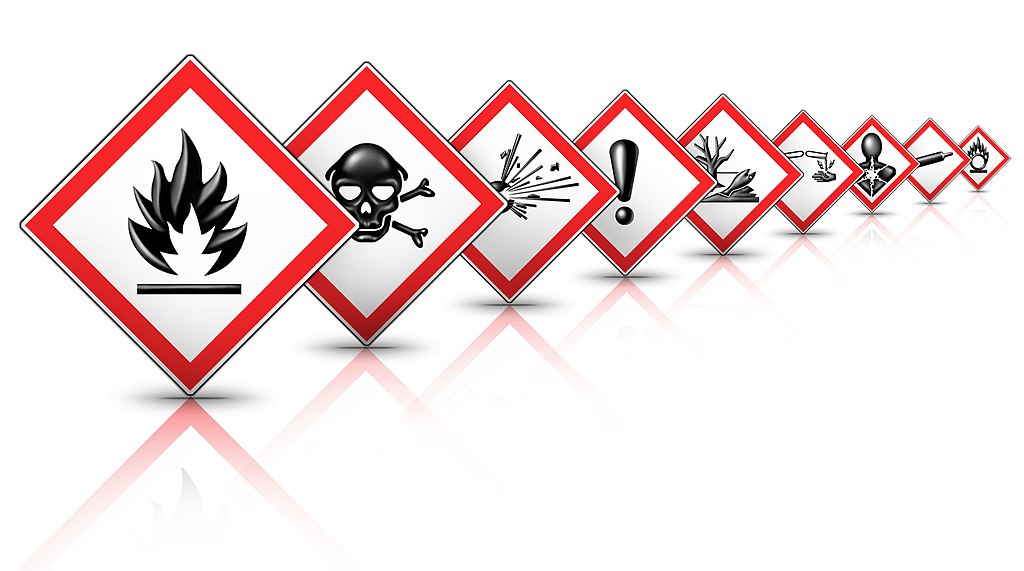
On March 31, 2023, the European Commission published the delegated act ammending the CLP Regulation with regard to hazard classes and criteria for the classification, labeling and packaging of substances and mixtures, and introducing several new classification criteria to identify endocrine disrupting chemicals and persistent and mobile substances.

Substances and mixtures with endocrine-disrupting properties pose a concern to public health and the environment. Also, substances and mixtures with persistent, bioaccumulative or toxic properties represent a very high concern, as they do not easily break down in the environment and tend to accumulate in living organisms.

What’s new?

On March 31, 2023, the European Commission published the delegated act (Regulation (EU) 2023/707), ammending Annex I to Regulation (EC) No 1272/2008 with regard to hazard classes and criteria for the classification, labeling and packaging of substances and mixtures, and introducing several new classification criteria to identify endocrine disrupting chemicals (EDCs) and persistent and mobile substances.

The amended regulation introduced 4 hazard classes for persistent and mobile substances:

  • Endocrine-disrupting properties for human health (Category 1, 2)
  • Endocrine-disrupting properties for the environment (Category 1, 2)
  • Persistent, Bioaccumulative, and Toxic properties (PBT, vPvB)
  • Persistent, Mobile, and Toxic properties (PMT, vPvM)  

What now?

The new rules are in force as of 20 April 2023.

For new substances on the market, companies need to comply with the new rules from 1 May 2025, whereas substancesthat havealreadybeenon the EU market, companies have until 1 November 2026 to comply.

Separate transition times apply for mixtures. New hazard classes apply from 1 May 2026 to newmixtures, whereas companies have until 1 May 2028 to update the classification and labelling for existing mixtures.

References:

European Chemicals Agency (ECHA) – New hazard classes 2023

other REGULATORY UPDATES

Regulation (EU) 2022/1531 – OMNIBUS ACT V – applicable as of 17 December 2022

Ingredients: METHYL SALICYLATE, SODIUM HYDROXYMETHYLGLYCINATE, DBMC, MIBK

Date of publication: 15/09/2022

Date of application: 17/12/2022

The European Commission has published the Commission Regulation (EU) 2022/1531, which amends the Regulation (EC) No 1223/2009 as regards the use in cosmetic products of certain substances classified as CMR, by adding new entries to Annex II and Annex III and revising an entry in Annex V.

Read More »

SCCS Final Opinion on the Safety of Triclocarban and Triclosan

Ingredients: TRICLOCARBAN and TRICLOSAN

Date of publication: 25/10/2022

During the plenary meeting on 24-25 October 2022, the Scientific Committee on Consumer Safety (SCCS) presented its final opinion on the safety of Triclocarban and Triclosan as substances with potential endocrine disrupting properties in cosmetic products.

Read More »

UK Responsible Person Labelling Deadline Extension

RESPONSIBLE PERSON

Date of application: 31/12/2025

The UK Office for Product Safety and Standards (OPSS) have reviewed the requirement to label the product with the UK Responsible Person and have decided to extend this transitional provision for a total period of five years, until 31 December 2025.

Read More »
Any REGULATORY QUESTION?

SCCS Final Opinion on the Safety of Triclocarban and Triclosan

Ingredients: TRICLOCARBAN and TRICLOSAN

Date of publication: 25/10/2022

During the plenary meeting on 24-25 October 2022, the Scientific Committee on Consumer Safety (SCCS) presented its final opinion on the safety of Triclocarban and Triclosan as substances with potential endocrine disrupting properties in cosmetic products.

Read More »

Italy and France – Environmental Labelling of Cosmetic Products

PACKAGING WASTE MANAGEMENT

Date of application:01/01/2023

Although the European Cosmetics Regulation is applicable to every cosmetic product made available in the European Union market, some national legislations may also apply. Environmental regulations in Italy and France specify mandatory labelling requirements applicable to packaged products marketed in these countries.

Read More »